Views: 0 Author: Site Editor Publish Time: 2026-06-12 Origin: Site
Almost every kitchen harbors a dark, frustrating secret: the blind corner abyss. It quickly becomes a dusty graveyard for expired pantry goods. You also lose track of forgotten roasting pans. This deep, inaccessible void wastes incredibly valuable square footage. Homeowners often resort to temporary organization hacks. They try sliding plastic bins or stacking wire racks. However, these minor stopgaps rarely solve the underlying ergonomic problem. We need to move past quick, temporary fixes. You must evaluate permanent, functional hardware upgrades instead. Your final choice should depend on daily accessibility. You also need to consider specific installation constraints and overall cost-to-value ratios. This comprehensive guide provides a highly practical decision framework. We will help you confidently select the right pull-out system. You will learn exactly how to match an organizer to your specific cabinet build. Say goodbye to awkward reaching today. Reclaim your wasted kitchen corners once and for all.
Not all corner solutions optimize space equally; circular trays inherently waste rectangular corner volume.
A robust 2-tier corner basket system generally offers the highest functional space recovery and weight capacity for blind corners.
Accurate measurement of the door opening (clearance) and internal depth is the single most critical step to avoid installation failure.
DIY installation is viable for most hardware, provided hinge protrusion and face-frame dimensions are accounted for.
Defining success requires a major mindset shift. We must move from merely measuring storage volume. Instead, we need to prioritize accessible volume. Deep, static shelving completely fails on an ergonomic level. Users routinely crawl onto the floor just to retrieve a single pot. Real success brings the cabinet contents entirely out to you.
You need a reliable way to judge different hardware options. Industry professionals rely on specific evaluation criteria. We recommend using these three primary benchmarks:
Space Utilization: Look closely at the exact percentage of dead space recovered. Rectangular units naturally fill corners better than round ones.
Weight Capacity: Ensure superior structural integrity. Your hardware must support heavy cast iron pots, pans, and countertop appliances securely.
Ergonomics: Favor systems fully extending past the cabinet frame. Partial pivoting systems still force you to bend over awkwardly.
Balancing upfront cost against daily longevity is crucial. Heavy-duty hardware naturally demands a higher initial investment. Yet, poorly organized deep cabinets cause severe daily friction. High-quality structural systems remove this frustration entirely. We focus on durable, practical value. Avoid cheap wire frames. They bend and derail easily over time.
Kitchen storage markets offer numerous hardware choices. You must understand how their mechanical designs differ. Some systems spin, some swing, and others slide directly forward. We have compiled a comprehensive comparison table below. This chart highlights space recovery and ideal use cases.
Organizer Type | Space Recovery | Ergonomics | Ideal Use Case |
|---|---|---|---|
Lazy Susan | Moderate | Good | Light dry goods & plastics |
Articulating Shelves | High | Excellent | Medium-weight pots |
2-Tier Basket Pull-Out | Very High | Excellent | Heavy appliances & dense items |
Modular Bins | Low | Poor | Renters on strict budgets |
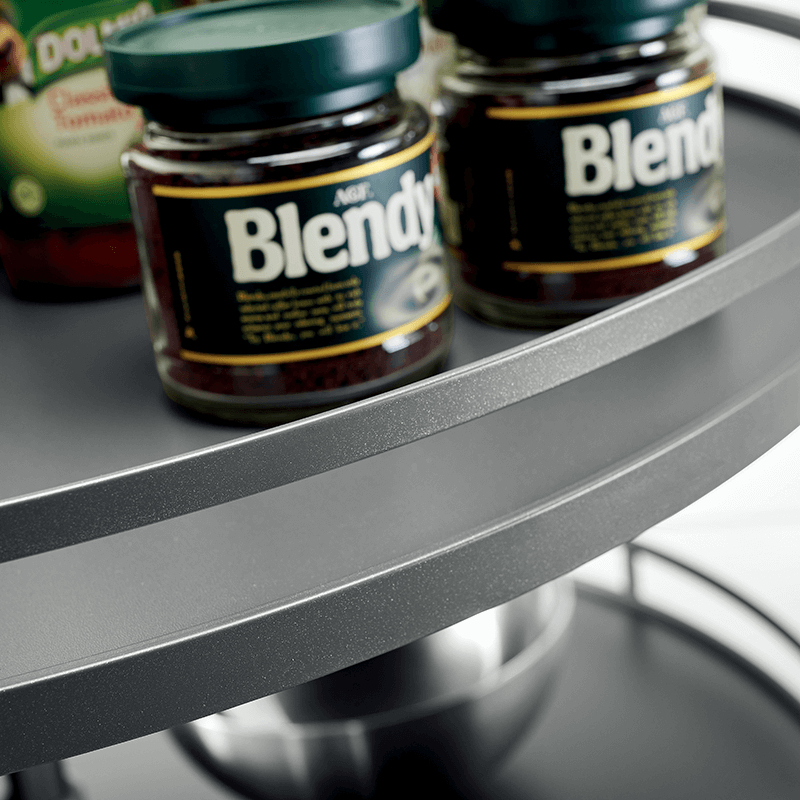
Rotating circular trays form the core mechanism here. They remain highly familiar to most homeowners. They also carry a relatively low upfront cost. However, they suffer from a severe geometric mismatch. Putting a circle inside a rectangular corner leaves roughly 20-30% of the space totally dead. Items frequently fall off the back edges during rotation. They tumble into the dark abyss. You then have to dismantle the unit to retrieve them.
These units use independent pivoting shelves. They swing out gracefully from the cabinet interior. Ergonomics are undeniably excellent. The entire unit looks premium and highly modern. Unfortunately, the price point runs very high. Installation proves notably complex for weekend beginners. Furthermore, irregular shelf shapes severely limit your storage options. Large, square appliances simply do not fit well. Slow cookers and air fryers overhang the peanut-shaped curves.
This mechanism uses cleverly linked rectangular baskets. Pulling the front door automatically draws the hidden back baskets forward. It brings them directly into the accessible opening. A 2-Tier Corner Basket maximizes cubic volume beautifully. The rectangular baskets perfectly match the right angles of your cabinet interior. Heavy-duty sliding tracks support exceptionally dense items easily. You can store cast iron skillets securely. Stand mixers glide out without sagging. The design remains highly compartmentalized. However, it absolutely requires precise cabinet opening dimensions. Smooth operation depends heavily on accurate internal spacing.
These systems rely on non-fixed plastic or wood bins. Users manually slide them around the cabinet floor. They offer a great renter-friendly solution. You face exactly zero installation risks here. Yet, they consistently fail to utilize vertical space effectively. Manual moving of the front bins is constantly required. You simply cannot reach the back bins otherwise. It remains a tedious daily process.
Sliding mechanisms offer superior linear action. We highly prefer linear motion over pivoting action. A slider supports much heavier loads effortlessly. It causes far less long-term wear on your delicate cabinet hinges. Cantilevered swing-outs stress door hinges constantly. Over time, cabinet doors begin to sag noticeably. Linear tracks distribute weight evenly across the solid cabinet floor. They roll smoothly regardless of the cargo weight.
Chart: Linear Action vs. Pivoting Action | ||
Mechanical Feature | Linear Action (Baskets) | Pivoting Action (Half-Moon) |
|---|---|---|
Weight Distribution | Floor-mounted tracks | Side or hinge mounted |
Hinge Wear & Tear | Minimal to None | High stress over time |
Motion Path | Straight forward pull | Wide lateral swing out |
A 2-Tier Corner Basket maximizes vertical space brilliantly. Standard base cabinets usually waste the top half of their volume. Deep static shelves leave a massive gap near the top. A dual-level structure utilizes this forgotten vertical zone completely. You effectively double your usable storage footprint instantly. The upper baskets hold lighter items perfectly. The lower baskets manage your heaviest cookware.
Deep basket walls guarantee excellent item retention. Flat-shelf designs often fail dramatically during motion. Tall items tip over backward. They crash into the cabinet interior. High basket walls prevent this disaster completely. Everything stays exactly where you originally put it. You avoid broken glass and spilled dry goods. This structural security adds massive peace of mind.
Many eager homeowners fall straight into the hinge clearance trap. Measuring the exact opening is absolutely critical. You must measure it while the door sits fully open. Ensure your hinges are fully engaged. Protruding hinges easily block slide-out hardware. A seemingly wide opening shrinks quickly. Hardware must clear the hinges without scraping. Taking rushed measurements leads to frustrating returns.
Identify your exact cabinet type carefully. Face-frame and frameless cabinetry require entirely different approaches. Mounting brackets must be compatible with your walls. Frameless builds often need side shims to clear door hinges. Face-frame cabinets might need wooden blocking placed behind the frame. Understanding your build prevents mid-installation panic.
Check the interior thoroughly for internal obstructions. Hidden plumbing lines ruin otherwise perfect installations. Gas pipes pose similar frustrating threats. Look out for overlapping drawer tracks from adjacent cabinets. These cause severe clearance issues deep inside the void. Inspect the cavern closely with a flashlight before ordering anything.
Examine base weight distribution closely. Heavy-duty ball-bearing tracks anchor directly to the base floor. Ensure the cabinet floor feels structurally sound. Flimsy bottom panels cannot hold heavily loaded track systems. The screws will eventually rip right out. Reinforce the floor with a plywood sheet if necessary. This simple step guarantees decades of smooth operation.
Accuracy prevents failure. Grab a reliable tape measure. Follow these exact steps to ensure a perfect fit.
Determine the Opening Width: Measure the narrowest point of the clear cabinet opening. Always account for any hinge protrusion. Measure from the hinge barrel to the opposite frame edge.
Map Internal Depth & Width: Measure straight from the inside edge of the front face frame. Run the tape all the way to the back wall. Next, measure the total internal width of the hidden blind side.
Select Left vs. Right Orientation: Industry terminology confuses many buyers. Stand facing the closed cabinet directly. If the blind hidden corner extends to your right, you need a blind right organizer. If it hides on your left, order a blind left unit.
Make the Decision: Create a final verification checklist. Confidently purchase your unit by checking minimum opening requirements. Always cross-reference your personal measurements against the manufacturer's exact specifications. Do not guess.
Best practices dictate measuring twice. Do not rely on original builder blueprints. Cabinets shift during house settling. Always take fresh, current measurements before adding hardware to your cart.
Conquering a deep blind corner requires bold, permanent upgrades. We must move far away from dark, static shelves. Dynamic, sliding hardware completely transforms your daily kitchen storage. For most standard kitchen configurations, a sliding dual-level basket system works best. It strikes the optimal balance perfectly. It perfectly marries cost, structural capacity, and total space recovered.
Action is required to see real results. Grab a tape measure today. Measure your specific cabinet opening carefully right now. Narrow down your viable hardware options using our framework. Start reclaiming your lost square footage. Your kitchen will immediately feel significantly larger. It will also function far more efficiently.
A: Standard industry requirements typically range between 15 and 18 inches minimum. However, this exact number varies widely based on specific basket designs. Track thickness also affects clearance. You must always check specific manufacturer specifications before purchasing. Always measure the clearance at its narrowest point. Factor in protruding door hinges.
A: Yes, DIY installation is highly achievable for intermediate DIYers. It requires basic power tools. You need a reliable drill and a driver. Careful measuring skills are essential. You must also read paper mounting templates accurately. Pre-drilling holes correctly ensures perfectly smooth operation.
A: Stand directly facing the cabinet door. Pay attention to the layout. If the deep, hidden section of the corner extends horizontally to your right, you need a right-handed (blind right) organizer. If the hidden cavern extends out to your left, choose a left-handed (blind left) unit.
A: Weight capacity depends heavily on the internal construction. Light-duty wire frames typically hold 15 to 25 pounds per shelf. Heavy-duty ball-bearing track systems easily support 45 to 60 pounds per basket. Always opt for floor-mounted heavy-duty tracks if storing heavy cast iron pots.