Views: 0 Author: Site Editor Publish Time: 2026-06-16 Origin: Site
Have you ever lost a perfectly good bag of flour to the dark abyss of a deep kitchen cabinet? Kitchen corners notoriously become inaccessible dead zones where essential items simply disappear. This common frustration wastes valuable storage space and turns daily meal prep into an exhausting physical chore. Basic decluttering tips merely mask the underlying issue. To fix this permanently, you must evaluate structural hardware solutions. Integrating an optimized pull-out system resolves the fundamental accessibility problem at its core. Upgrading your cabinetry ensures every square inch works tirelessly for your needs. In this article, you will discover a practical, evidence-based framework for comparing various hardware options. You will learn how to measure accurately for precise installation and avoid expensive design mistakes. Finally, you will confidently select the ideal mechanism tailored to your daily cooking workflow.
Hardware Selection is Contextual: Choosing between a Lazy Susan, a swing-out corner basket, or a blind corner pull-out depends entirely on your cabinet’s door clearance and interior depth.
Corner Baskets Maximize Visibility: Articulating corner basket systems offer the highest item visibility and access compared to static shelving, significantly reducing spatial waste.
Installation Realities: Retrofitting requires strict attention to hinge clearance, face frame dimensions, and weight distribution to avoid mechanism failure.
Investment vs. ROI: Upfront costs for heavy-duty metal organizers yield long-term durability and eliminate the hidden costs of wasted groceries and ergonomic strain.
Before you purchase any hardware, you must understand your cabinet geometry. Not all kitchen corners share the same layout. Identifying your specific cabinet style is the crucial first step.
Blind corner cabinets feature a single standard door. Half of the cabinet interior hides behind an adjacent row of cabinets. You cannot see into this recessed area without physically reaching inside. Diagonal corners look completely different. They feature a door set at a 45-degree angle. This design offers a much wider front opening. However, it creates incredibly deep rear cavities. Reaching the back requires long arms and serious flexibility.
Ignoring these awkward spaces carries a surprisingly high cost. We often frame this dead space problem purely as an annoyance. Yet, it actually represents lost square footage in your home. You pay for expired pantry items hidden in the shadows. You also risk poor kitchen ergonomics. Kneeling and twisting to retrieve a heavy pot places immense strain on your lower back. Every time you dig for a lost lid, you waste valuable cooking time.
To optimize these areas successfully, any proposed solution must meet three specific criteria. Consider this your baseline framework for evaluation:
Complete Item Visibility: The system must bring items out into the light. You should never have to guess what hides in the back.
Minimal Physical Strain: Operation should require effortless pulling or gliding. Bending and excessive reaching must be eliminated.
Appropriate Weight Support: The hardware must safely carry your specific inventory. It needs to handle heavy cast iron pans just as easily as lightweight Tupperware containers.
Once you identify your cabinet type, you face a crowded market of organization tools. Every system promises to fix your corner chaos. However, they perform very differently in real-world scenarios. We can break down the top mechanisms to see which one truly delivers.
Many homeowners start by adding basic plastic bins to existing shelves. This represents the lowest upfront cost. You can implement it immediately after a quick trip to the store. Unfortunately, the drawbacks quickly become apparent. You still have to manually dig through the bins. Pulling a heavy bin out from a deep recess feels awkward. This method offers terrible scalability for heavy items like stand mixers or Dutch ovens.
The Lazy Susan remains a nostalgic favorite. This spinning mechanism works best inside diagonal corner cabinets. It allows you to rotate items to the front quickly. However, it carries significant limitations. The circular shape physically cannot fill a square cabinet. This leaves empty, wasted zones in all four perimeter corners. Furthermore, items constantly fall off the edges when you spin the trays too fast. Retrieving a fallen can from behind a Lazy Susan is a notoriously frustrating task.
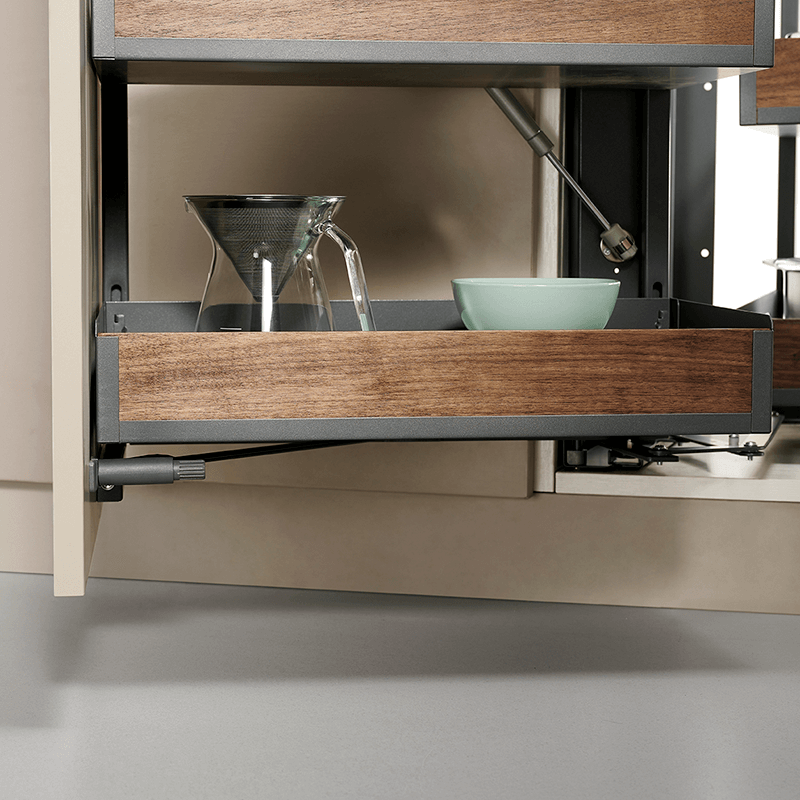
For standard blind corners, articulating systems represent the gold standard. They are often called magic corners. When you pull the cabinet door, a precise mechanical ballet occurs. The first set of baskets glides out toward you. Simultaneously, the hidden back baskets slide laterally into the main opening. You then pull the rear baskets forward. This completely exposes the hidden recess. Integrating a high-quality Corner Basket maximizes your spatial utilization. It offers unparalleled visual clarity. You utilize the full depth of the cabinet without any dead zones.
Cloud-shaped pull-outs offer another popular alternative. They feature smooth, independent shelf operation. You pull one shelf completely out of the cabinet while the other stays inside. They certainly look elegant. However, the organic curved design wastes vertical and ambient space. They require wide sweeping arcs to clear the cabinet frame. Consequently, they hold significantly less volume than a squared basket approach.
Hardware Comparison Chart | |||
Mechanism Type | Best Cabinet Match | Visibility Level | Space Waste |
|---|---|---|---|
Static Bins | Any standard depth | Low | Medium |
Lazy Susan | Diagonal Corner | Medium | High (corners) |
Articulating Basket | Blind Corner | High | Low |
Cloud Pull-Out | Blind Corner | Medium | Medium (curves) |
Knowing the type of mechanism is only half the battle. You must evaluate the physical construction of the system. Your daily habits dictate the specific materials and mechanisms you should buy.
You must honestly assess what you plan to store. Wire mesh baskets work beautifully for dry pantry goods. They keep boxed foods visible and allow airflow. However, they buckle under severe weight. If you store cast iron pans, you absolutely need solid-bottom metal baskets. They provide a rigid foundation that prevents sagging.
Pay close attention to the sliding hardware. Never settle for plastic tracks. You should prioritize commercial-grade ball-bearing glides. These robust metal glides handle dynamic loads effortlessly. They keep the movement smooth even when loaded with fifty pounds of dinnerware.
Understand the operational differences before you purchase. Swing-out systems attach directly to the cabinet door. As you open the door, it drags the first basket out with it. This creates a seamless one-step motion. However, this convenience comes with a risk. The heavy weight of the basket places immense strain on your cabinet door hinges over time.
Alternatively, standard pull-out systems decouple from the door. You open the door first. Then, you manually pull the handle to slide the mechanism. This two-step process protects your hinges entirely. All the weight transfers directly to the cabinet floor.
Kitchens generate steam, grease, and moisture. The material of your chosen Corner Basket matters for longevity. Chrome-plated steel looks highly polished and professional. Yet, cheap chrome flakes off and rusts in humid environments. Epoxy-coated wire offers excellent rust resistance. It wipes clean easily when sticky spills occur. For premium setups, look for treated stainless steel or heavy-duty powder coatings.
You found the perfect system. Now comes the technical reality of fitting it into your kitchen. Retrofitting hardware requires absolute precision. A single miscalculation leads to an impossible installation.
Your cabinet construction heavily dictates your options. American-style cabinets usually feature a face frame. This means a solid wood border surrounds the cabinet opening. The frame creates a lip that narrows your functional entry point. European-style frameless cabinets lack this border. The opening spans the entire width of the cabinet box. You must base your hardware dimensions strictly on the clear opening size, not the interior volume. A massive interior means nothing if the frame blocks the hardware from sliding out.
Hinge collisions destroy countless DIY weekend projects. When a cabinet door opens to 90 degrees, the hinge knuckle often protrudes inward. If you mount a sliding basket perfectly flush, it will crash violently into this hinge. This represents the most common retrofitting failure. You must measure the clearance around the door hinges carefully. Many installations require wooden spacer blocks to push the glide track away from the hinge side. Alternatively, you can swap out standard hinges for zero-protrusion specialty hinges.
Never assume the back of your cabinet is completely empty. Corner units frequently sit near sinks or major appliances. Peek inside with a flashlight. Look out for exposed plumbing pipes, gas lines, or electrical junction boxes. These utilities reduce your usable interior depth. If an obstacle exists, you must measure your maximum depth from the front of the cabinet to the nearest protruding pipe. Do not measure to the back wall. Failing to spot an electrical box means your new organizer will never fully retract.
Making a final decision involves balancing your expectations with the realities of the market. Understanding the price tiers helps you match the solution to your budget.
Setting realistic cost expectations prevents sticker shock. If you take the DIY route with static plastic bins, you can expect to spend between $20 and $50. Stepping up to basic Lazy Susans pushes the budget to roughly $50 to $150, depending on the material. If you want engineered pull-out systems or magic corners, prepare for a higher bracket. These complex mechanisms typically range from $200 to over $800. The pricing reflects the heavy-duty metal components and complex sliding articulation.
How do you justify a premium mechanism? You calculate the daily return on investment. Count how many times you access that corner weekly. If you cook daily, struggling with a dark cabinet creates immense cumulative frustration. Reclaiming 20% to 30% of previously unusable storage directly expands your kitchen footprint. It delays or eliminates the need for expensive structural kitchen remodels. It prevents you from buying duplicate groceries simply because you lost the originals.
Use this actionable matrix to finalize your selection based on specific scenarios:
Scenario A: You have a diagonal corner cabinet and store mostly lightweight Tupperware.
Action: Choose a classic two-tier Lazy Susan.
Scenario B: You have a narrow blind corner (15-inch opening) and store heavy pots and pans.
Action: Choose a solid-bottom, heavy-duty articulating pull-out system.
Scenario C: You have a blind corner but rent the apartment.
Action: Avoid drilling into the cabinetry. Choose modular static bins with built-in handles.
Solving the frustrating dead space in your kitchen corners requires precise action. You cannot fix a structural flaw with better folding habits or temporary decluttering. Upgrading your cabinetry hardware transforms a dark recess into highly functional storage. It improves visibility, reduces physical strain, and protects your items.
Your next steps should focus strictly on measurement and verification. Grab a tape measure and determine your clear door opening width. Check your interior depth and scan for hidden utilities. Review specific manufacturer spec sheets before making any purchase. Ensure the dimensions match your reality.
Do not let another square inch of your kitchen go to waste. Evaluate your space, choose the right hardware mechanism, and finally take control of your corner cabinets.
A: Yes, retrofitting is highly common. However, it requires careful preparation. You might need to remove center stiles in some framed cabinets to fit the hardware. You must also ensure absolute precision with door hinge clearances so the mechanism slides freely without scraping.
A: Capacity varies strictly by the mechanism design. Standard wire baskets usually hold 15 to 25 pounds per tier. Heavy-duty solid-bottom metal models can support up to 45 to 50 pounds per tier. You should always verify the manufacturer's dynamic load rating before storing heavy cookware.
A: They are not strictly better; they simply serve completely different cabinet shapes. Lazy Susans remain ideal for symmetrical L-shaped or diagonal corners. Conversely, articulating organizers are specifically engineered to rescue the hidden, hard-to-reach space inside deep blind corners.