Views: 0 Author: Site Editor Publish Time: 2026-06-05 Origin: Site
Deep cabinets and fixed shelving often create completely inaccessible dead zones in your kitchen. Forgotten items easily slide to the back. This inevitably leads to expired goods and severe vertical volume waste. Transitioning from static shelving to dynamic hardware solves this exact issue. It acts as a strict functional necessity rather than a mere aesthetic upgrade.
Modern home design demands high efficiency. We must evaluate storage based on retrieval speed and ergonomic ease. Implementing sliding mechanisms transforms rigid boxes into highly fluid workspaces. This guide provides a comprehensive, layout-specific framework. We will help you evaluate, select, and implement structural upgrades.
You will learn how to measure correctly for retrofit projects. We will explore the mechanical differences between various glide technologies. By the end, you will understand how to turn deep, frustrating cavities into highly accessible storage hubs.
Standard fixed shelves waste up to 30% of usable cabinet volume due to vertical clearance requirements for hand access.
Integrating a high-quality pull out basket system converts inaccessible back-of-cabinet depths into 100% usable, full-extension storage.
Hardware selection must be dictated by dynamic load ratings, cabinet dimensions, and existing hinge clearances rather than aesthetics alone.
Retrofitting existing cabinetry requires precise measurement of internal width, depth, and door swing to prevent functional failure.
Standard kitchen base cabinets and pantries typically measure 600mm in depth. This dimension accommodates large plates and appliances perfectly. However, it creates a massive accessibility flaw for everyday pantry items. Items positioned at the very back simply vanish from sight. They become hidden behind rows of newer groceries. You cannot retrieve these items without first removing everything in the front row. This limitation defines the classic reach and see deficit. A single Pull Out Basket completely eliminates this blind spot. It brings the deepest stored goods directly into the ambient light of your kitchen.
Fixed shelves require substantial empty air space above the stored items. You must leave room for your hand to reach inside, grab an object, and lift it over the objects in front. This vertical gap usually consumes 10 to 15 centimeters per shelf. Across a standard full-height pantry, this wasted air space equals an entire lost storage tier. Sliding systems allow you to pack items densely from top to bottom. You access items from the side or top once extended. You no longer need front-to-back hand clearance.
Physical strain represents a hidden penalty of traditional cabinetry. Bending down to floor level, twisting your shoulders, and unstacking heavy cans puts unnecessary stress on your lower back. Navigating a static 600mm deep lower shelf forces poor posture. Installing a dynamic Pull Out Basket transforms this experience. You simply open the door, pull the handle, and the entire inventory glides outward. This full-visibility outcome protects your body. It reduces bending and completely removes the need for blind lifting.
Galley kitchens feature parallel counters with a central walkway. Space remains incredibly tight. Every centimeter of width counts immensely. You often find awkward 150mm to 300mm gaps between refrigerators and adjacent walls. Standard shelving cannot utilize these narrow vertical slivers. Tall, slimline pull-out frames capture this dead space perfectly. They slide out linearly into the walkway. This allows you to store spices, oils, and shallow boxes without sacrificing primary cabinet zones. The linear extension keeps the walking path clear when closed.
L-shaped layouts naturally create a deep, dark corner where two cabinet runs meet. This blind corner frequently becomes a graveyard for seldom-used appliances. Base-level configurations utilize specialized articulation mechanisms. They bring this deep storage into your primary working triangle. When you open the adjacent door, the front section pulls forward. A secondary carriage then slides laterally into view. This continuous motion utilizes the entire corner depth. It brings heavy mixers and pots right to your fingertips.
U-shaped environments offer ample counter space. They wrap around the user on three sides. Implementing heavy-duty, multi-tier pantries at the end of the U-shape maximizes efficiency. This setup serves as a centralized, high-capacity grocery hub. It prevents family members from crossing into the primary cooking zone to grab snacks. You consolidate dry goods into one vertical tower. This strategy leaves the entire U-shaped base open for pots, pans, and cooking utensils. It effectively streamlines your daily meal preparation flow.
Hardware specifications dictate long-term reliability. We must distinguish between static and dynamic load ratings. A static load refers to weight placed on stationary hardware. A dynamic load measures the weight the hardware can safely carry while in motion. Moving 30 kilograms of canned goods generates significant momentum and sheer force on the metal tracks. You should always insist on hardware rated for dynamic movement.
Minimum threshold: Seek a minimum dynamic load rating of 20kg per tier.
Heavy goods: Use 30kg+ ratings for storing root vegetables, glass jars, or liquid containers.
Safety margin: Always leave a 10% safety margin below the maximum rated capacity.
The runner system acts as the absolute core of any sliding pantry. Two primary mounting styles dominate the market: side-mount and undermount runners. Side-mount slides attach to the cabinet walls. They consume valuable horizontal width. Undermount slides sit entirely beneath the basket. They maximize the internal width of the drawer. Heavy-duty, soft-close, full-extension slides remain an operational necessity. Full-extension ensures the back of the drawer clears the cabinet frame entirely. Soft-close mechanisms utilize hydraulic dampeners. They prevent heavy loads from slamming shut, which causes items to tip and stresses the hardware joints.
Selecting the right basket material depends heavily on your specific storage inventory. Both wire and solid bases offer distinct advantages.
Material Type | Key Characteristics | Ideal Storage Items | Potential Drawbacks |
|---|---|---|---|
Wire Baskets | Provides excellent air circulation. Extremely high visibility from all angles. Lighter overall hardware weight. | Root vegetables (potatoes, onions), sealed boxes, larger packaged goods. | Small items can fall through the gaps. Liquid spills drip down to lower levels. |
Solid Base / Acrylic Bottoms | Higher structural rigidity. Smooth surface prevents tipping. Contains liquid spills entirely. | Small spice jars, flour bags, baking supplies, heavy small appliances. | Heavier baseline weight reduces available payload capacity. Less air circulation. |
Retrofitting existing cabinets introduces strict dimensional constraints. Many homeowners mistakenly measure the outside of the cabinet box. You must measure the precise internal opening. Pay close attention to face frames. Framed cabinets have a structural lip that narrows the entryway. Frameless cabinets offer a wider, unobstructed opening. You must also account for internal obstacles. Check for exposed plumbing pipes, gas lines, or electrical routing at the back of the cabinet. These elements reduce your usable internal depth.
Ignoring door hinge protrusion remains the single most common retrofit failure. Standard cabinet hinges often protrude 15mm to 25mm into the internal opening. If you install a drawer perfectly flush with the cabinet wall, it will violently strike the hinge when pulled out. You must use hinge spacers to bump the sliding hardware away from the wall. Alternatively, you can swap your existing hinges for zero-protrusion hinges. These specialized hinges swing the cabinet door entirely out of the internal cavity's path. This ensures the sliding frame clears the door edge effortlessly.
Older cabinets settle over time. They frequently fall out of square. Installing precision glide tracks in a warped cabinet causes binding and severe friction. You must check the corners with a framing square before ordering hardware. If the cabinet walls lean, you will require wooden shims to level the internal mounting points. Furthermore, thoroughly inspect the base panel. Do not install heavy multi-tier systems in cabinetry showing water damage or compromised base panels. The immense dynamic weight will eventually tear the screws out of degraded wood.
Risk Factor | Symptom | Mitigation Strategy |
|---|---|---|
Hinge Blockage | Drawer hits door upon extension | Install zero-protrusion (155-degree) hinges or use lateral spacers. |
Out-of-Square Walls | Runner mechanism binds or sticks | Use a laser level and insert wooden shims behind the runner tracks. |
Base Panel Sag | Bottom mount tracks pull upward | Reinforce the cabinet floor with a 12mm plywood overlay before mounting. |
Step 1: Audit Storage Inventory. Evaluate what you currently own. Determine if the system will hold high-density weight like canned goods, glass jars, and small appliances. Conversely, decide if it will primarily hold high-volume, low-weight items like cereal boxes and bagged snacks. This dictates your load rating requirements.
Step 2: Map to Cabinet Dimensions. Match your inventory needs to the precise internal depth, width, and height available. Always measure the narrowest point of the opening. Account for hinges and door sweep. Ensure you leave a 5mm tolerance on all sides to prevent scraping.
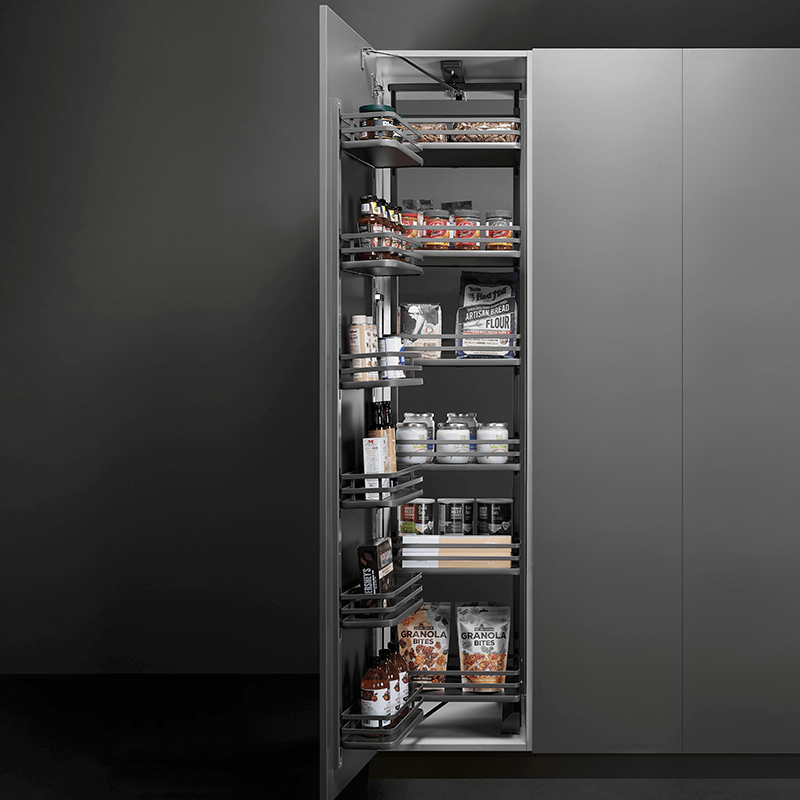
Step 3: Select Hardware Tier. Decide between individual drawer-style units and unified frames. Individual drawers allow you to customize heights for taller bottles. A unified, frame-mounted pantry pulls out the entire vertical stack in one single motion. Unified frames work best for tall, narrow spaces.
Step 4: Consult or Purchase. Direct your final measurements to a hardware specialist. Request a technical quote for your specific layout configuration. Cross-reference their recommended specifications against your initial audit to ensure total compatibility.
Maximizing kitchen space relies entirely on accessibility, not just total square footage. A deep cabinet offers no value if you cannot reach the items inside. Implementing dynamic sliding hardware completely eliminates dark zones and physical strain. Upgrading to a specialized sliding system serves as a highly measurable investment in daily efficiency and ergonomic health.
Take immediate action by emptying your most problematic, cluttered cabinet today. Measure the precise internal width, depth, and height. Identify any hinge obstructions or internal plumbing constraints. Compare your measurements against high-quality hardware specifications to find your perfect functional match.
A: Most standard systems require an internal cabinet depth of at least 500mm to operate correctly. However, slimline models designed for shallow spaces can fit into depths as small as 400mm. Always check the manufacturer's exact track length before purchasing.
A: Yes, retrofitting is highly common. You must ensure the older cabinet walls are structurally sound and square. You might need to use shims to level the tracks. Replacing standard hinges with zero-protrusion hinges is usually necessary to allow clear extension.
A: High-quality hardware typically supports a dynamic load of 20kg to 35kg per tier. Heavy-duty unified pantry frames can support up to 100kg across the entire structure. Always verify the dynamic load rating, not just the static resting limit.
A: Individual drawers offer superior height flexibility. You can space them unevenly to fit tall bottles and short cans. Single-frame pantries offer single-motion access, bringing everything out at once. Frames suit narrow spaces better, while individual drawers excel in wider base cabinets.
A: Invest in soft-close, hydraulic dampened runners to eliminate jerky movements. Utilize solid base bottoms instead of wire if you store top-heavy items. You can also add magnetic dividers or pegboard pegs inside the drawer to hold items firmly in place.